


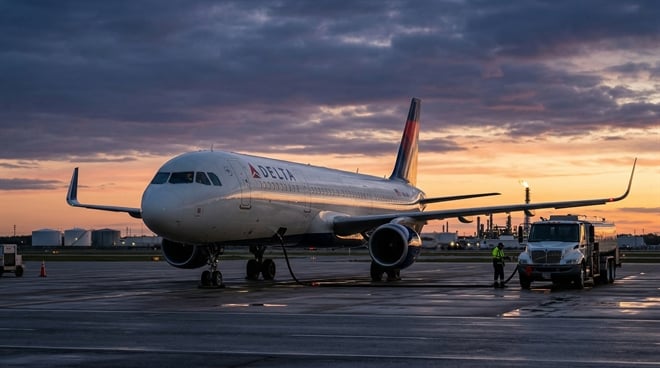
Delta jet is refueled on the tarmac, highlighting fuel costs amid Q1 earnings pressure.
Despite record quarterly revenue, Delta reported a double miss for Q1 2026, driven in part by a 132% year-over-year spike in jet fuel prices caused by geopolitical instability and the closure of the Strait of Hormuz.
The airline aims to offset rising costs through fleet modernization and its unique ownership of a fuel refinery.
Delta has issued cautiously optimistic Q2 guidance, expecting to recover 40% to 50% of the “unprecedented” fuel headwinds while maintaining margins of 6% to 8% in Q2.
Interested in Delta Air Lines, Inc.? Here are five stocks we like better.
Delta Airlines (NYSE: DAL) reported Q1 2026 earnings on Wednesday, April 8, announcing a double miss.
In his earnings call comments, CEO Ed Bastian noted the role that “the significant step-up in fuel” played, while acknowledging that the airline faces “several external headwinds.”
→ 3 Surprising S&P 500 Outperformers of 2026
Those headwinds include the fallout from the Iran war, and more specifically, the closure of the Strait of Hormuz, which has disrupted global supply chains for the spectrum of the fossil fuel industry, leading to a dramatic uptick in crude oil prices. Specific to the aviation industry, jet fuel prices have seen a 132% year-over-year (YOY) increase.
Delta’s earnings and revenue misses should come as a warning to the transportation industry, which falls into the broader industrials sector, as elevated input costs are likely to erode the profit margins of companies heavily reliant on oil. They also put the spotlight on a familiar airline risk: when jet fuel surges, even solid demand can get overshadowed.
→ Microsoft’s Copilot Problem Isn’t What You Think
The Q1 results weren’t all bad news for shareholders, though. Bastian pointed to earnings that were 40% higher YOY—consistent with Delta’s guidance at the beginning of the year—as well as record revenue, which increased more than 9% YOY.
But some of the disappointing…
..